Feeds:
Posts
Comments

Gerry, we hardly knew you ..

The disclosure by Gerry Adams that his father was a paedophile and a thug has come against the background of a countrywide sense of shock at abuse within the Catholic church.

Now the hierarchies of two historic institutions within the same community are under suspicion. The Catholic church and the IRA have a long history of antipathy but they have seemed at times almost mirror images of each other in their value systems, their reverence for martyrs, for instance. Now, as bishops come under pressure to resign because they failed to deal directly with child-abusing priests, the most revered republican in Ireland is having his own acquaintance with abuse scrutinised. It started last week when Áine Tyrell gave an interview to Ulster Television claiming that her father, Liam Adams, brother of Sinn Féin leader Gerry Adams, had sexually abused her for years, from the ages of four to 12.

She revealed how she had reported this to the police and to Gerry Adams himself and how, over many years, Gerry had tried to bring Liam and his daughter together “to bring closure to Áine”. Gerry Adams has called on his brother to give himself up to the police. This in itself is indicative of the change in republican culture. In the past, those who were found to be sex abusers were shot dead by the IRA.

And a republican such as Liam Adams would have been prime pickings for blackmail and recruitment as an informer. It was in a second media interview about this that Gerry Adams dropped the bombshell news that his own father, Gerry Sr, who had been an IRA gunman in the 1940s, had also abused his children. Gerry said he had no personal memory of having been abused himself and that, though he lived in a family with 10 children in a small house, he had not been aware of this abuse until he was almost 50. The story that unfolds now is of a Gerry Adams who, through all the protracted negotiations to resolve the peace process in the past decade, had other burdens to carry, the revelation that his father had been a paedophile and the suggestion that a pattern of abuse had extended into his own generation.

Gerry Adams is now faced with exactly the same kind of questions that bishops are confronted with. In the case of the bishops these have become the test questions by which they can survive in their posts or must resign.

If Gerry Adams were a bishop he would be gone now. He has accepted that he handled things badly. When he brought his niece face to face with her allegedly abusive father, he acknowledged on BBC Radio Ulster that he should have done this within a therapeutic context. He acknowledges that he was slow to act when he discovered that Liam Adams was working with children, and that when he did act it was to approach Liam rather than those who employed him. And he says that he had Liam drummed out of Sinn Féin without explaining to the party why he believed he had to go.

The big question is whether any of this can damage Gerry Adams politically. One likely response is sympathy for a man who had borne a great family secret when he had political work of national importance to deal with at the same time. Another may be to pick at the details of his mismanagement for evidence of collusion or incompetence. But questions such as that can only damage him if they come from within his party. And he is still held in reverence by many there. But for many there is now a sense that Gerry Adams is not the man they thought they knew. He is more complex and more vulnerable. They always understood that he was a man with secrets from an IRA past he still denies. But such secrets as these?

Gerry has a problem in that he is expected not to tell the straightforward truth. He denies that he was in the IRA and most people understand that he has to do that. He doesn’t do candour.
Now he wants to be understood as speaking from the heart about his family problems and people are just looking for the political motivation or the hint of another game.
There are many reasons why he would have wanted to conceal the allegations of abuse made against his brother. Let me list some of them:
1. Those who had had members of their family shot by the IRA after being accused of sex abuse or other crimes would have charged Gerry with absolving his brother for no other reason than that he was a family member. They would have said that the IRA operated one law for ordinary Catholics and another for its insiders.
2. Many would have asked whether he was able to advance the peace process with these other family problems to deal with. The argument that he step aside would have been strong.
3. The allegations against his brother and the revelations about his father would have reflected badly on the republican movement. People would ask, as they do, if it is abuse and trauma that drives republican anger rather than British imperialism.
4. People would have asked if Gerry was capable of choosing reliable people. His chief administrator and head of security would be outed as British agents. A brother being investigated by the police for paedophilia would have compounded the impression that Gerry’s whole team was flaky.
5. The news that Liam Adams had been reported to the police for alleged child rape but not charged would have raised suspicion in republican circles that he was an informer and some would have wanted him interrogated on the basis of those suspicions.

Unto Us a Child ….

My excuse is that there was no rehearsal and I was working with children.

Rev Chris Hudson roped me into his Nativity Play at All Souls Belfast and this is how it went.

The Launch

This is me flanked by a couple of bright lights, Fiona and Sheila, from my memoir class at the launch of Under His Roof last week.

Who Needs Bishops?

The Catholic church is in disgrace.
We do not know how many priests have molested children but we know that hundreds did. The old argument put up in defence of the church, that a child was in no greater danger from a priest than from any other type of person, is now invalidated. Children were in danger at the altar rails, in the sacristy and in schools.
Still, it is likely that more priests – many more – did not offend than did.
There is no excuse for some of the craven whinging from priests who tell us that they suffer now for sins they did not commit, drawn low in general esteem by the behaviour of others.
That behaviour suggests that they want to cash in on what victimhood is going and preserve the old relationship with the people and their children. They just don’t grasp the fact that it is the whole church that is tainted.
For, if there are many innocent priests, there are not so many innocent bishops.
Aside from Bishop Diarmuid Martin’s heroic breach with the institutional secrecy of the church, which made the Murphy report possible, there may not be a single other bishop above suspicion of criminal cover up and collusion.
We have now had two diocesan reports, in Ferns and in Dublin. The pattern of abuse and secrecy is the same in both. It may be presumed that the same pattern covers the whole island, and perhaps the whole Catholic world.
So, this is about a collapse of moral authority.
For many ordinary Catholics it must feel a bit like the fall of communism did in Russia. Archbishop Martin’s contribution was Glasnost, candour. It was timely and it was called for, but nothing that follows from it is reversible.
This is at least like the moment when Kruschev disclosed the sins of Stalin to a shocked populace, and made them nervous about how to reconcile their conditioned reverence for the Great Leader with the newly comprehended reality.
The question facing Ireland now is, who needs bishops?
The management of child abuse by the Vatican and the refusal to co operate with the Murphy commission, remind us that Rome is a foreign state exercising power in other countries. Indeed, the excuse for not co operating was precisely that it would only accept communications on a diplomatic, state to state basis.
It sees the relationship with Ireland as political.
There is only, however, a theological basis for an arrangement whereby appointed emissaries of Rome should excercise power in Ireland, govern schools and hospitals and direct the expenditure of government money. That basis is that the Catholic hierarchy is legitimate legatee of Christ’s apostles, dispensing divine authority.
If people don’t believe that, why would they concede any authority to a bishop?
The irony is that ireland has been preoccupied in the last century with the fear that it was being treated like a colony by Britain while Rome had its unanswerable consuls and footsoldiers in every parish and school.
And they took their orders from the top, even orders to contravene state law, as when in 2001 the Pope demanded that all complaints against priests be first referred to him, and that even this order should be kept secret.
Bishops are an unecessary stratum of authority. That they be removed is all the more urgent given that they have abused that authroity and conspired against the people. But who is to remove them?
The Taoiseach says that the sacking of bishops is for the church to decide on, even though his government shovels money towards the church for the administration of services which are government responsibility.
The Catholics of Ireland wouldn’t know how to ditch their bishops, even after they have lost all respect for them.
The priests have pledged obedience to the bishops, and when they have been at odds with them, they have cowered docilely away. This happened when the Conference of Priests of Ireland disbanded,two years ago, demoralised by a sense that the bishops were paying no attention to them.
And anyway, the dispute there was that the priests were angry about the main measure the bishops had put in place to assert their concern for abused children. They had ruled that any priest accused of abuse would be immediately suspended. Priests, who depend on the church for a roof over their heads, wanted this rule reversed.
Anyway, usurp the bishops and Ireland becomes protestant.
But the rapid fall off in the numbers of priests will change the character of Catholic Ireland soon, and shift the centre of influence to the laity. Some then will see the Bishops as the enduring link to a global church; some others may see them as a superfluous burden.
The behaviour of Bishop Donal Murray of Limerick, cited in the Murphy report for ‘inexcusable’ handling of a paedophile priest during his time as an auxiliary bishop in Dublin, is an illustration of how reluctantly these men are slouching towards full realisation of their responsibility and shows us what pathetic moral champions they make.
Bishop Willie Walsh has been defending Murray on the grounds that somone who had read the report had explained to him that Murray’s offence was slight. Walsh conceded he had not read the report himself.
So his immediate instinct in the face of a moral challenge was to close ranks and patronise the rest of us. It was ok for him not to have read the report but the rest of us should lay off poor Donal Murray until we had.
In no other walk of life would such disemblers and bumblers be deferred to as figures of authority, and what Ireland is contemplating now is the possibility that those who covered up for paedophiles, on secret instructions from their master in Rome, should continue to wield power, run services, administer schools and hospitals and appoint the clergy and exact total obedience from those clergy.
This would be an almost inconceivably inappropriate and unjust outcome from the disclosures that they conducted themselves like a criminal mafia against the people from whom they exacted reverence.
But who will step forward and take responsibility and power away from these disgraced men?
Anybody?

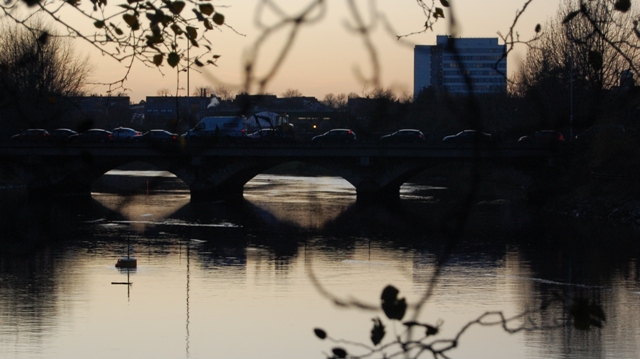
Evening in Belfast

Another Pesky Belfast Mural

Talk about Podcasting

This is a conversation I had with Paddy Hoey, editor of Gobshite’s Miscellany, about blogging and podcasting and the future of new media and old.
Mind you, Paddy did most of the talking.

We recorded it over an ordinary BT landline with a SSS RTL-650 from Solid State Sound.


One overlooked aspect of the Eames Bradley report on the past was the charge that the churches have a responsibility for sectarianism.

[You’ll note that there is a new player format here now. It’s a bit brash, I know, but I’ll find something more suited to the genteel people who visit this site.]

Rev Lesley Carroll explained it all to the Clonard Fitzroy Fellowship last week.

My next book, Under His Roof, to be published by Summer Palace Press in time for Christmas, is a sequence of vignettes about my late father, Barney O’Doherty. I have recorded a few pieces below and will add more later.

Keeping Yourself to Yourself

http://malachi.podcastpeople.com/redirect/media/35587malachi-o-doherty-35587mp3

Barney assessed the merits of a man by his ability to keep quiet about his doings.

Barney’s Dogs

http://malachi.podcastpeople.com/redirect/media/34620malachi-o-doherty-34620mp3

We always knew a dog’s time was up when it started to cough. These were dry hacking coughs that disturbed the creature’s whole body. And the bounce would go out of the beast as the grip of distemper tightened. Barney would not even consider calling a vet but he had sufficient concern to try his own remedies.

Barney’s Language: http://malachi.podcastpeople.com/redirect/media/34215malachi-o-doherty-34215mp3

Barney lived in a world in which spanners and knives and even people were not named. The yoke and the cutty and the gulpin were to be spoken of a little coyly, in case others listening in should know what you were talking about. There were other traditional language terms used around me growing up, ‘thran’, to describe a canny person of few words and dry humour, Barney never used those other words much. The beauty of those words is in their capacity to sharpen thought and refine an image. Barney was not preserving an old language so much as an old code.

Barney’s Noises http://malachi.podcastpeople.com/redirect/media/32300/malachi-o-doherty-32300mp3

Snoring was nature’s guard dog. At the ancient campfire, it was probably a warning to all dangerous animals to stay away, for the man is never more bestial and appalling than when he is shuddering from deep in his throat up to his sinuses.

Digging

There can be few more grim and ghoulish jobs than sifting a wet and
mucky bog for a body.
Those who consigned Gerry Evans and others into the dark grime in
remote country areas intended that those bodies would never be found.
And the most benign interpretation of their failure now to give
precise location details is that they also buried their own guilty
memories deep.
Gerry Evans disappeared — or was ‘disappeared’ — over 30 years ago.
If his family has learnt anything since, it is patience.
I met Mary Evans, Gerry’s mother, in Crossmaglen last year and the
striking thing in our conversation was how she remembered specific
dates, like sacred anniversaries.
She last saw Gerry on the 25th of March 1979. He had left the house
after dinner to meet friends in Castleblaney and had not returned. On
the 18th of March 2008 someone put a map through the letterbox of
Gerry’s aunt’s house in Keady, with a note saying, ‘We believe this is
where Gerry is buried’.
Just this week, the digging began.
I also met Gerry’s brother Noel, who was only 11 years old at the time
of the disappearance and who admits to not having really grasped the
horror of it until he was older. ‘You couldn’t really work it into
your intelligence what had happened until you got older, and what a
bad situation you were in.’
And still, though anonymous people are apparently moved to be helpful,
Gerry Evans is in a different category than most of the disappeared,
for the IRA does not formally acknowledge any responsibility for him,
or for another Crossmaglen man, Charlie Armstrong, who disappeared
close to the same time.
In an area saturated with Republican sympathies, the Armstrongs and
the Evanses say they feel that they are the only people who understand
each other and the grief of living with unexplained loss. Mary Evans
says, ‘People don’t really understand. Me and Kathleen Armstrong
would meet going to mass; we could talk about it because we knew how
each other felt. Other than that it was all silent.’
Kathleen Armstrong says, ‘That longing is always on you to have a
grave to go to.’
All of the families of the disappeared have articulated a similar
sense that their experience cuts them off from the world, since those
who have never felt the need to recover a body for a funeral, don’t
really understand that perpetual ache.
One Irish government minister, meeting one of the families, is
reported by them to have callously said that they should ‘move on’.
The troubles were over, he said, ‘Everyone else has moved on, why
don’t you?’
The families have, in fact, made a major concession in their
desperation for news. They have accepted that those who killed Gerry
and Charlie should not be punished or even shamed.
Noel Evans put it like this: ‘Now we have gone beyond justice and
we’ve said that. We don’t want people scared to contact the
confidential line or scared to contact us for fear of reprisals or
fear of justice being done to them. Those days are gone. We just want
closure.’
They do not want to be perceived, in Crossmaglen, to be working for
the embarrassment of the IRA. They appeal only for something no
decency could refuse, a Christian funeral.
There are many around them who respect and even revere the IRA. There
may even be some who believe the IRA’s profession of ignorance of the
fate of the two men.
Probably, the practice of ‘disappearing’ their victims was adopted by
the IRA as an effort to retain respect in their communities after
orders that would have been hard for their neighbours to endorse.
The earliest disappearance that we know of is the most famous, that of
Jean McConville, a mother of ten children, living in the Divis Flats,
when, in December 1972, the Belfast IRA determined that she was an
informer and took her from her home and shot her. In the normal run of
things, at that time, an informer’s body might have been found in a
back alley. But 1972 had been a difficult year for the IRA. They had
come under the first real pressure from the Catholic community to end
their campaign, and had even conceded a two-week ceasefire that summer
and entered talks with the British government. Much of that pressure
had centred on their killing of Martha Crawford during a gun battle in
Romoan Gardens in March, though they tried to blame that on the army.
The IRA had hoped to preserve a reputation for honesty and plain
dealing with the Catholic community, but it had more lies to tell
before it would decide that Jean McConville’s body be buried 50 miles away on
a County Louth beach and that no claim of responsibility would be
made.
They professed themselves mystified by the bombing of Claudy in July 1972 and the murder of eight people there.
When one of their bombs, in transit, killed eight people in Anderson
Street in the Short Strand, the IRA claimed that it had been planted
by Loyalist paramilitaries or the SAS. This was to be remembered for
years as one of the great atrocities against the Catholic community.
An IRA statement had said that the bombers had been seen entering the
street and that an active service unit had attempted to intercept
them. That was how they explained the deaths of IRA members at the
scene.
They also lied about the killing of eight year old Rosaleeen Gavin and
about their responsibility for the bombing of the Abercorn Bar. A
unifying feature of the actions they disowned before the murder of Mrs
McConville is that they all entailed the deaths of women or children.
So a pattern of lying to the Catholic community, which it professed to defend, was well established before the secret burial of Jean McConville, and one effect of this was to exaggerate the threat against that community from Loyalists and the British.

Most of us knew nothing of the secret burial of IRA victims until
after the ceasefire of 1994. Then Helen McKendry, Jean McConville’s
daughter, gave an astonishing interview to David Dunseith on the
Talkback programme on Radio Ulster. She described how, after her
mother had been taken from their home, she had, as a little girl,
looked after the other children in their flat and how, after several
weeks, social services took them into care and separated them.
Then other stories followed, with the families of Brian McKinney and
John McClory coming forward and a campaign getting underway.
Progress has always been slow. The Sinn Fein leader Gerry Adams
pledged to help the families and visited Helen McKendry to hear her
story and assure her of his concern.
The breakthrough came in 1999, when the IRA formally admitted to the
disappearing of nine people.
The British and Irish governments agreed to the creation of a
Commission for the Location of Victims Remains, which would guarantee
immunity to any members of the IRA who came forward with information
about where they had buried people.
The first body to be given up was that of Eamon Molloy an Ardoyne man
whom the IRA had shot as an informer in 1975.
Brian McKinney and John McClory were discovered in 1999. The IRA had
shot them in 1978 after Brian McKinney had allegedly admitted stealing
from them.
It took another four years and an exhaustive search of a beach in
County Louth before Jean McConville was found. The search for her body
had closer media coverage, probably because it was easier for
broadcasters to marshal their cameras on a beautiful beach in fine
weather. Reporters watched a digger scoop and sift the sand, hour
after hour, day after day, looking for clothing or a few bones. The
searching seemed to unite the scattered McConville family, and they
erected a small shrine to their mother at the beach. The search itself
proved fruitless. The body was found at a separate beach. It then
became clear that Jean McConville had died of a single bullet wound to
the head.
There were two unsuccessful searches also for Danny McIlhone, in 1999
and 2000, before his remains were found last year in the Wicklow
Mountains. The story behind his death is that the IRA had been
questioning him about the theft of some of their weapons and that he
had been killed in a struggle to escape.
The IRA admits to having killed four other missing people, Kevin
McKee, Columba McVeigh, Brendan McGraw and Seamus Wright.
The families of the disappeared still meet formally twice a year, for
a mass on Palm Sunday and a small ceremony at Stormont on All Souls
Day.
The families of those whose bodies have been found continue to attend
these gatherings, being the only ones who really empathise with the
suffering of people like Mary Evans and Kathleen Armstrong.
This year there was a new family among them, that of Peter Wilson, of
the St James area of Belfast, who went missing in 1973.
The question of whether he rightly belongs on the list of those the
IRA killed and hoped we would never hear of again is a serious one. It
opens up the possibility that the IRA, which has pledged to being open
and helpful is still harbouring what secrets it can.
But for the family of Gerry Evans, hoping that his bones might emerge
from the bog and that their last realistic prospect of giving him a
funeral might be fulfilled, the broader politics of blame and guilt
are irrelevant.
They only want their boy.