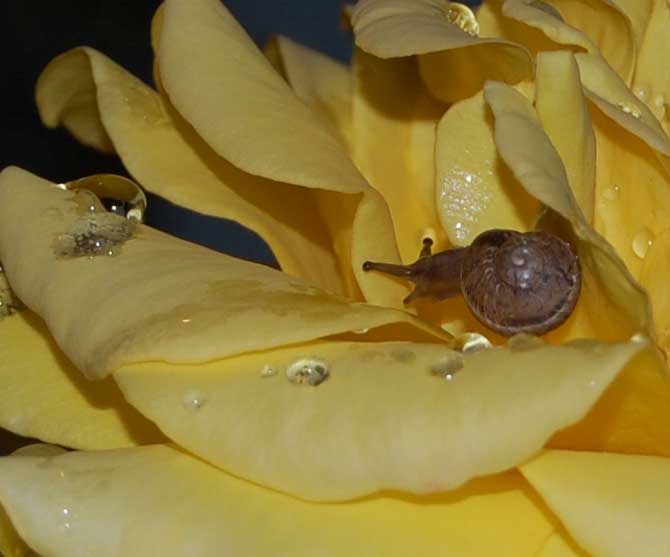
Not far now
Just to come back to the theme of beards for a moment: I got seduced into setting up one of those Facebook quiz things: ‘how much do you know about…?’ – in this case me.
And one of the questions I posted was: How does Malachi trim his beard?
The options included, biting it, plucking it, trimming it with a babyliss strimmer and ‘he doesn’t, it stopped growing years ago.’
All three people who took the quizz went for that last one.
I had never realised that we hairy chinned ones were such a mystery to the rest of you.
Posted in Uncategorized | 1 Comment »
No one took responsibility for the rape and brutalisation of children by religious orders when it was happening but there are more ways to respond now than simply by being appalled and swearing it will never happen again.
For a start, the orders which were responsible should be disbanded. This will only have token value, since there are few people left in them here and they have no responsibility for children any more. But if they stood down themselves it would be a singular admission of disgrace, and that is what is required of them.
Further, the state should impound their property and reverse legal sweetheart deals to limit the amount of compensation they would have to pay.
Those who continue to celebrate the contribution of these orders should examine their consciences carefully.
Currently there are Christian Brother trusts running schools on both sides of the border, preserving, as they see it, the ethos of the Christian Brothers.
Well the legacy of the Brothers may include some doctors and solicitors who think they got a fine education, but the suffering inflicted by the Brothers was not a fair price for that.
Those trusts should divest themselves of the name and reputation of the Brothers.
Further, I would like to see the history of the depredations, the cynicism and the corruption of the orders and much of the secular church taught to children in schools. It is as important that the history of this hideous period be taught to children here as it is that the history of the Holocaust be taught in Germany.
The atrocities were different in scale and degree, but the story is the same, of how ordinary people can become bestial.
And if the story is told, it has to be related to the global story. In many other countries, the sexual exploitation of disadvantaged children by Irish missionaries was disastrous.
In Canada, they were involved in running schools for Native American children. Those children were trained for servility before their white masters. Thousands were raped and many of those who fled the schools died.
In Australia they were responsible for the importation of Irish orphans and their severance from all hope of knowing who they were.
And if the evidence of experience now is that these celibate orders fostered sadism and sexual perversion, then we must look closely at how they are now conducting themselves in countries where they still function and claim respect.
There are no Christian Brothers teaching in Ireland but there are many in India and in several African countries.
If Ireland is to accept responsibility for the suffering that past generations allowed to be inflicted on children, then it must speak to those other countries and alert them to the danger that their own children may be abused in this way.This could be an Irish diplomatic responsibility.
Never again should these orders be respected or their word be taken untested about what they are doing.
And then we must try to understand how these things happen. Presumably many of those who joined the orders did so with an honest intention of living a disciplined and celibate life. Many of them left home at 14 to join junior seminaries, before their own sexuality was awakened and then had to learn to live with an impossible pledge to celibacy taken before they were fully formed.
These boys and girls also swore obedience to their orders and were, therefore, easily manipulated.
And then they were clustered together in single sex institutions, treated like gormless functionaries by their own superiors and put in charge of vulnerable children, who served the role of the cat that the office boy kicks.
But we have seen it in prisons and concentration camps and in English public schools, that a combination of sexual repression and power produces sadism.
Our own beloved CS Lewis, in a book regarded as a spiritual classic, Surprised By Joy, describes, indulgently, the routine sexual exploitation of little boys in an English public school.
These things were worse in Ireland than elsewhere, and where they were at their worst elsewhere it was often Irish clergy and religious who were doing it. That is the unforgettable legacy of a proud Irish missionary endeavour.
Well, let’s at least be sure, as far as we can, that future generations remember and understand, and that anywhere on this earth that an Irish missionary is in charge of children there is someone keeping a close watch on him.
Posted in Culture and Society, Religion | 164 Comments »
Who do you respect?
Set aside for a minute the individuals you look up to, because they have impressed you.
What category of people do you think deserves a respectful nod, being – by virtue of their work or standing – more important than you?
None?
Well, that’s good.
But until very recent times, it was obvious who the leaders in society were.
If you were preparing to meet your bank manager, for instance, you would put on a tie or your best shoes. You would want him to see you at your best, as a responsible and dependable person. You might even have felt a little frisson of humility when ushered into the presence.
That was six months ago.
Now what do you think of bankers?
They have plummetted in the public regard from being seen as the people who oiled the cogs of business, from the small company to the major enterprise; they were the ones who assessed the credit you could afford to handle and who endorsed your efforts with a little patronage.
Now they are widely seen as scheisters and rogues, who turned out not to be deft managers of credit but financial alchemists.
I mean, thanks for the sub prime mortgage, chaps, but did you have to give every one else one?
But the speed of the collapse of the reputation of bankers, dizzying as it was, seems sluggish compared to the collapse in the standing of members of parliament.
These are people who live by ritual, are addressed as honourable and right honourable, just in case we shouldn’t notice what fine and elevated people they are. And, sure enough, they are our law makers and also our servants.
And their position was underwritten by the great ideological principle of our times, democracy. So even when they were making a hash of things, we could allow them to imagine that they had the people behind them.
Then we got the slow erosion of respect for them through spin and media management, followed by the total crash of their stock, as it emerged that they had been fiddling their expenses and using them, in many cases, for property speculation, while, at the same time, lecturing us on the need to tighten our belts, limit our payrise claims and live off miserly benefits.
I mean, how low and hypocrtical do you have to be to string out pensioners with vague promises of future increases while shuffling them parcels of coal through the winter, while at the same time all around you MPs are shuffling their receipts to maximise returns from the tax payer?
The problem for the MPs now is that they can not credibly demand that people pay their taxes fairly, any more than bankers can insist on our probity.
And, if two pillars of rectitude alone had been deflated within months of each other, that would be remarkable but there is a third, the church.
OK, it is a long time since people saluted the priest on the street and got out the best china for him when he called.
Today you might be advised, if he did call, to usher your children upstairs out of harm’s way.
The implosion in the prestige of the church has been progressive over several decades. The religious orders had collapsed before the scandals.
But there was a time when a man or woman in black robes, walking towards you on the street, would prompt you to straighten up and show a little respect.
Who inspires that reaction in you now? Anybody?
Posted in Culture and Society | 2 Comments »
“Snoring was nature’s guard dog. At the ancient campfire, the low rumble was probably a warning to all dangerous animals to stay away, for the man is never more bestial and appalling than when he is shuddering from deep in his throat up to his sinuses. “
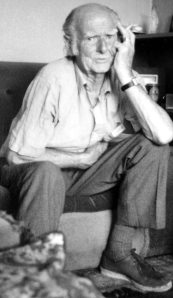
Barney
Posted in Uncategorized | 2 Comments »
It might be that most of us will survive swine flu and that the world in six months from now will not be greatly changed by it. Or maybe the world will be more radically transformed by something we haven’t noticed. We did not, after all, seem to think global warming would bring us down when only a decade ago the great fear was of a new ice age.
But the notices on the trees and telegraph poles around us since we were children have said, ‘The End is Nigh’, and we tend to think that is about right.
I have lived in a fatalistic Hindu culture in which people believed there was nothing they could do to avert destiny and yet they had the paradoxical faith that life just goes on and on. It is we Christians and post Christians who live with the perpetual sense that the world is about to end.
And maybe it is. Philosophers like John Gray have made an unnervingly plausible case for pessimism about the immediate human future. I’m more with the irrepressible Steven Hawkings who tells us to prepare to seed new colonies among the stars, to sustain us in millions of years from now when we will have outlived this planet, our first stepping stone.
The superstitious expected the end of humankind to come with the turn of the millennium. A close reading of Nostradamous by writer Colin Wilson, suggested 1998 might be the year to keep your head down.
And though we didn’t fry under a thermonuclear blast or see the collapse of all our networks with the unleashing of Y2K, we did see – and continue to see – threats to our survival, coming at us like thundering bowls from God’s low swing. Either something is trying to finish us off, and just missing us every time so far, with Sars, Meteorites, Bird Flu, melting ice floes, or we are projecting a scary pattern onto random events.
A lot depends on how we perceive our vulnerability as a species. We might be eradicated by a super volcano; we came close to it once before. And who’s to say that Knocklayde won’t erupt again? But, for now, what may be hurting us more is our ingrained tendency to read all threats apocalyptically.
I was part of a drop-out generation in the 1970s which really did expect nuclear war. If you had asked any of my hairy friends of the time why they were smoking dope and not looking for a job, most would have said, ‘because there is no point’. The declared western strategy for dealing with a possible Russian invasion of Germany was a nuclear attack. And for the Russians to believe that the west would really do something so stupid, the ordinary population had to believe it too. You need propaganda to make a nuclear option plausible, and it’s message must be that you are prepared to lose your own population in order to win a war. It is an atrocity against the well being of the people on your own side.
We were trained then by our own cold warrior governments to expect the end of the world. This fitted very neatly with the religious culture of the west, and particularly with the new apocalyptic millennial evangelicalism. The irony about this new Christianity is that it was driven by men in slick suits who seem to be doing very well out of the world they wanted us all to get ready to wave goodbye to.
Pastor McConnell at Whitewell was preaching the imminent end of the world in the 1990s. I wonder how many of those who took him seriously had life insurance policies and long terms investment portfolios.
Swine flu seems to fit so neatly into our routine, and now tiresome, expectation of global calamity that some people are now finding that a reason to dismiss the warnings.
And some of the media are going over the top. The BBC on Wednesday was reporting ‘suspected cases detected’, as if straining to exaggerate the chance that someone with flu symptoms might give them the headline they were yearning to write.
Journalist Ben Goldacre has described in the Guardian how, in the interest of balance, numerous BBC programmes have been inviting him on as a swine flu sceptic.
The best balance of all right now would be the plain realistic understanding that new diseases come along from time to time and hit us hard – as did Aids. This might be one of them; it might not. Either way it doesn’t mean anything other than that we should be prepared to safeguard our wonderfully prolific, still-surviving selves, in the real hope that we do have a future.
Posted in Culture and Society, Uncategorized | Leave a Comment »
I worked with a dozen men from different European countries in Libya, teaching conscripts of the Air Defence Forces. My job was to teach them English. German and Swiss men taught them mechanical and electrical skills.
There were few women anywhere near us. The camp boss’s wife stayed for a few weeks and left appalled at the behaviour of men towards her. One nudged her into the swimming pool one night, fully clothed without checking first that she could swim. I think it was probably her morning recollections of how she shrieked at us that decided her to leave.
This was a good time for me. It wasn’t a wholesome or natural environment. It was very tense and argumentative. You could walk into the canteen in the morning and judge the moods of the other men – how well they had slept, how anxious they were about whether their women were waiting for them – just by the darkness of their expressions.
Mostly.
Some men just don’t function until they have had coffee.
Sometimes when men yelled at each other, they couldn’t help laughing too. Walter the cook had asked me to send roses to his ex wife for her birthday when I was on leave in Geneva. They were still friends. She had even visited him in the camp.
The florist in Geneva said I could buy a dozen roses at their prices and the florist in Jersey, where she lived, would adjust the numbers to suit the price.
Walter was waiting for me when I came back to the camp.
“What the fuck have you done? You sent her sixty fucking roses.”
Some men smouldered quietly. Denis told me one day that he saw a scorpion in his ice cream.
What was good for me about that period was that it counterbalanced previous periods, like my religious phase in India. Where that had been a return to childhood to resample domination by a religious fascist, this was a return to the playground, to reassess my natural placing in masculine pecking orders. At school I had virtually volunteered for the lowest place, because I was small and could not fight. In among the heavy and frustrated men on the Taguira work camp, I placed myself more easily close to the top, or at least around the middle, because big hefty men liked me.
We lived in a camp near the coast. We had our prefabricated living quarters, two bedrooms in each with a bathroom between, so that you wouldn’t hear your neighbour wanking, but you would hear him having a shit.
We worked about twenty miles away in compounds that looked like ordinary English schools built in the Sixties, with their big glass windows and boarded walls.
One of the ways in which I had endeared myself to some of the men was by writing spoof notices for the staff board. Most of us were annoyed by the real ones, warning us that there was a shortage of pencils, for instance. I did one in which I pretended to be the Chief Executive from Zurich, setting a shot spots competition. This was my protest at the failure of the laundry system to wash out the semen stains from the sheets. And you could always tell by the semen stains you got back that these weren’t the same sheets that you had sent to the wash. You always knew your own.
I had the CE in Zurich imagine that these stains formed fortuitous images of small animals or even European countries. I offered a prize for the best identification of a shot spot with a recognisable object.
We travelled every day by Peugeot station wagons to army camps where we taught.
These were brutal places. The first day we arrived we saw a dozen boys in army fatigues being bunny hopped across the yard.
“They are putting on a show for us”, said Geoff, a skinny lad from New Zealand who lived in a constant fret.
They weren’t. They were always punishing somebody.
After mid morning break on my first day I asked one of the brighter lads, Sanousi, where the boy he had been sitting beside had gone. Why was he not back in class?
“Broken leg”, said Sanousi.
“Running in corridor”, said a tubby lump beside him.
Had he fallen and hurt himself?
No, he had been beaten for running in the corridor and now he couldn’t walk.
The standard punishment, I learnt, was to have two larger soldiers lift you upside down, with your feet fed through a loop wrapped along a stick and beat the soles of your bare feet.
Sanousi’s desk mate was in bed recovering from such a beating.
A worse punishment was to be made walk across the tarmac yard on your bare knees. One day I saw five boys put through this, with an officer walking behind to kick the soles of their feet so that their knees would scrape the rough surface.
And a common punishment was for a boy to be made stand in full combat gear in the hot sun, perhaps with his boots slung from his neck and his stinking socks in them, sometimes after being hosed down and made to roll in the sand. He would be stood there until he dropped and left to lie there afterwards if the officers judged that he had dropped too soon.
The officers who supervised these punishments seemed decent but bored men. I would never send any boy to the officers for bad behaviour, though some of the other teachers adapted quickly to the system. They could control a class; I couldn’t.
After a time I realised that I had to make some concession to established order I would just be the weakest, most easily defied authority figure in the school. So I would put disruptive boys out of the class and leave them to survive the officers as best they could. If they didn’t get caught, that was fine. They weren’t disrupting my class. If they did get caught and came back limping, then that was something they had brought on themselves.
Though they lived in a harsh environment, the boys themselves were sensitive and gentle. One day I met wee Khalifa after arms training. He was dragging a Self Loading Rifle along behind him, holding it by the barrel. As a child I had had a better sense of how to hold a gun, from playing with toys. I had loved to nurse my rifle and posture with it. Khalifa hadn’t the least inclination to do that.
One day in the language laboratory I told them that I could show them my country. I played The Lonesome Boatman into their headphones and said: Listen carefully. You will see the cliff over the sea. You will see a gull soaring out from the land and high over the waves. That is Ireland”.
They sat hushed listening to the mellow flute, then one of the boys came alive, shooting his hand up.
“Mr Malky! Mr Malky! I can see it”.
One day the officers called a tear gas exercise. The boys were taken out into the yard and made stand with their gas masks off while grenades were let off around them. They had to wait for the order to don the masks. Streams of yellow and red gas poured up from spots on the yard and drifted across through the school windows.
“We can’t work in these conditions”, I said. “I am taking the teachers out”.
“Ah, you are not man enough for this”, said the officer in charge that day.
He was very amused.
He thought we would have been proud to accept the opportunity to show that we could endure being gassed by substances we knew nothing of.
There were three ranks of officer running these camps, distinguished by the number of stars on their epaulets, the lowest with one, the highest with three. Three star officers were so highly ranked that we almost never saw them or dealt directly with them.
All of the boys on their days off dressed like generals in fancy uniforms with braid and big epaulets, when they were allowed to hitch hike into Tripoli.
I wonder how they are now.
Posted in Uncategorized | Leave a Comment »
Northern Irish politicians are campaigning for compensation from the Libyan government for their having armed the IRA. I wish them every success. But if they encounter a certain Colonel Juma, I’d love them to ask him if he remembers me.
In the early 1980s I taught English to conscripts of the Libyan Air Defence Forces.
One day I was with my class when a young three star officer came frantically into the class. The boys all stood sharply to attention.
The officer spoke a little English and a little French and conveyed the problem to me. Colonel Juma had arrived to inspect the metalwork class. I was to take the boys immediately to the workshop for a demonstration.
“No, I can’t do that. I don’t teach metalwork. That’s Peter Keller’s job. Go and find him”.
Three-star looked appalled at me. I had not understood how serious this was. There was no time to discuss it. He snapped at the boys and they ran out to the workshops. I would have to find Peter.
Peter was a towering man with ginger hair and a sneering sense of humour. He took his job seriously and was often complaining about slack standards in Libya.
I heard some movement in the room next to the main workshop classroom where the boys were frantically tidying their uniforms and gathering samples of their metal work.
Inside Peter was on his knees on the floor, in a blue T shirt and white boxer shorts, painting a yellow line to mark the perimeter of a large green machine.
“Go away, Malachi. I am busy”.
“Peter”, I said. “Colonel Juma is here and he wants to inspect the metalwork class. You have to help”.
“I do not have to help. This is my day off. I am not really here at all. I have come in my own time to catch up on work and I don’t have to do anything”.
“O.K.” I tried to be more diplomatic. “This is not a problem of my making either, Peter, and I can walk away too”.
“Then do it”.
I went back into the class room and the boys were now erect and stiff at their desks. Each held up a little piece of iron which had probably started out as square, but had holes drilled in it and angles cut into it. I had done some metal work at school myself and could judge how roughly some of these had been finished.
Right. Let’s just wait.
Then the door opened and in walked Colonel Juma, the second in command of the Libyan armed forces, accompanied by several others of similar rank and a fawning and wilting young three star officer.
Juma was a stocky black man. His epaulets had gold eagles as well as stars. The other officers had declining numbers of stars and eagles, and beside them our own top man, with no eagles at all, looked pretty meek.
I had no idea what to say. I was without words. Colonel Juma approached me with a warm smile and I said hello and gestured towards the petrified boys.
Juma was clearly puzzled by my behaviour but perhaps used to people wilting before him.
Then the door opened and Peter strode through. He was wiping his hands with a dirty cloth.
“Why is it that you can never get any fokking work done around here?” He flung the cloth aside and strode on past and out the main door.
I probably whimpered like a stricken beast at that moment. I might have been rallying myself to address Colonel Juma and the officers, but now I was thrown and could organise no words.
Colonel Juma and one of the senior officers, perhaps the third in command of the armed forces of the Libyan Peoples Arab Jamahiriya, walked the ranks of the class. The other officer elected to provide some kind of commentary, though what he could have known about Peter’s metal work class, I don’t know. They were civilly making do with a badly organised presentation, which made them seem to me to be the most adorable of men.
Peter then returned through the class door.
“Gentlemen! What can I do for you today”, he said.
The colonels all turned and smiled warmly, as charmed by him as I had been by them. They seemed to float towards each other, cushioned on an air of supreme confidence.
Peter turned lightly to me and said: “You are looking a little pale Malachi.”


Posted in Culture and Society, Politics, Northern Ireland | Leave a Comment »
One of the telling moments, when you seek to be a detached and cynical atheist, is when you open a copy of the New Testament to read the account of the Last Supper and the crucifixion of Jesus Christ – just for research purposes.
For you may have disregarded the myth since you left school and stopped going to church – which in my case was 40 years ago – but there is no escaping the hold of this powerful and moving story. Especially, the version according to John.
This is one of the stories that we learnt as children and it survives in our imaginations with a potency that Red Riding Hood and Santa Claus just don’t have.
And in a rapidly secularising Ireland, Easter retains a magic and enthralls like few other times of the year.
Part of that, of course, is because it is bigger, for most of us, than the Passion. We have our own rituals around eggs, bonnets and the flight to Donegal which have nothing to do with Christian heritage.
Easter is the first holiday of the Spring. April sunshine — when you get it — awakens a nostalgia for freedom and romance, the best parts of Springs past. The sap is rising. Something of our own selves, overshadowed by winter, is resurrected at Easter.
When we were children, we went to the church to pray at each of the stations of the Cross and to contemplate the suffering of Jesus. There was a bit of guilt-tripping going on there too. It is still the message of most churches that we are to blame, ourselves, for the suffering inflicted. God had to become a man and suffer as a man because we were sinful.
There is actually very little sense of that burdensome idea in the Gospel itself. Jesus never says, I have to go off and get flayed now, because Adam ate the apple, and you’re no better yourselves.
It is clear from the Gospel accounts that Jesus was crucified because he had rebelled against the Temple. He was – like myself – profoundly anti clerical. He is my anti-clerical hero.
I personally think the story has been damaged by the mythologising in the Christian tradition.
Without any interpretation added on to it, the story of the Last Supper and the arrest and crucifixion in John’s gospel evokes deep feelings. I suspect that this story would still be with us as a piece of treasured ancient literature, engaging our fascination still, even without the gloss. In a secularising Ireland, where fewer and fewer people take the church interpretation literally, it would be a tragedy if this story was lost to us because it was dismissed as only having Christian significance.
In most of the Christian tradition, Jesus is understood to have known himself to be the son of God, on a mission to lay down his life for the sins of humanity. What is lost in that version, is the earliest heartbeat detectable in world literature, of a man agonising and struggling.
Some of the Christian churches have gone back to the text, stripping away the ritual and theology of, say, the Catholic Churches, to find a simpler Eucharist.
The Last Supper is remembered by Roman Catholics as the establishment of communal sacrament, exclusive to true believers. The evangelicals read the story more truly when they offer the bread more freely. After all, Jesus did not refuse it to Judas.
But their conviction that Jesus was God makes much of the story unintelligible. Why would he have gone into the desert for forty days? Usually such a pilgrim is trying to draw closer to the divine – what need would Jesus as God have had to do that?
There are some elements of the story which are perplexing. When Jesus rode on the donkey into Jerusalem, in Matthew’s version, and reached into a fig tree for something to eat, and didn’t find fresh fruit, he cursed the fig tree never to bear fruit again. What was that all about? The modern Christian perspective allows little room for the petulance of Christ.
The story lends itself more to creative rereading than to ossification in doctrine.
There are numerous little flashes of temper, and even sarcasm, in the gospels. ‘The poor you will have always with you.’ There just isn’t an interpretation of those words available to us that does any credit to him. But they ring so truly that they tell us that they are the words of a real man; just not the man Jesus as envisaged by Hollywood or in the little holy pictures I used to have in my prayer book.
Nowadays, I am more likely to encounter the story of the Passion in literature and music than in church. There have been numerous novels retelling the crucifixion, from Kazantzakis to CK Stead. The body of music continues to expand, from the passions of Bach to the Seven Last Words of James MacMillan, religious music that sells to cultured secular people.
This story will not die so long as thier are minds to engage with it and retell it. It might even have a better chance to flourish when the churches have lost hold of it altogether.
Posted in Culture and Society, Religion, Uncategorized | 1 Comment »

| M | T | W | T | F | S | S |
|---|---|---|---|---|---|---|
| 1 | 2 | 3 | 4 | |||
| 5 | 6 | 7 | 8 | 9 | 10 | 11 |
| 12 | 13 | 14 | 15 | 16 | 17 | 18 |
| 19 | 20 | 21 | 22 | 23 | 24 | 25 |
| 26 | 27 | 28 | 29 | 30 | 31 | |

 Malachi O'Doherty