The past in Northern Ireland is a clatter of unfinished stories, and the neater and more vague the official versions of events, the more suspicious and cynical we become.
Rightly or wrongly.
An early assessment of past violence was the Widgery Tribunal into the Bloody Sunday killings of January 1972. That taught us how examining the past would have to work. The government of the day and the political and military leaders would have to be shielded from any charge of murder. That’s how most of us understood the implications of the report.
Only when the main players were dead, 38 years later, could a report be published and accepted by a Prime Minister that shamed the army and the judiciary.
The past has come back to us three times this week.
An enquiry into the murder in prison of the loyalist killer at Billy Wright published its £30 million report and told us nothing we didn’t know, that Wright had been killed by a group of INLA prisoners, who had somehow acquired guns, and scaled a prison roof when a surveillance camera was conveniently switched off. But there was no government or security service involvement.
Now, some people hear a story like this and think — well, isn’t that the way of the world, you turn your back for a minute …
But most of us, hearing of the deft assassination of a man who was a major threat to the peace process, whose removal was so convenient, will sense intrigue. We can’t help it. Any novel that opened with the murder of an irrepressible killer like Wright — who was going to be back on the streets if not stopped — would have to end with a very wide circle of machination exposed.
Not in real life — yet hard not to wonder if in another 30 years, when this may be no more than just a morsel of history, a piece of paper will turn up, the connection between the assassin and — well somebody very big and safely dead.
Isn’t that what happened a few weeks ago in the report of the police ombudsman — by the way, are you counting all these reporting and investigating bodies and noting how the job of sifting the past has become so fragmented? The police ombudsman, reporting on the bombing of Claudy and the murder of nine people in 1972 found that the Northern Ireland Secretary of State, William Whitelaw, had visited the head of the Catholic Church, Cardinal Conway, and arranged for the transfer of the chief suspect in the bombing, a Catholic priest, Father James Chesney.
Now that couldn’t have come out when Whitelaw was alive.
Certainly not when he was in Margaret Thatcher’s Cabinet, as Home Secretary. Unthinkable.
But years later and the new Tory top tier in government has no problem dumping on the reputation of a predecessor, any more than on the soldiers who slaughtered innocents on Bloody Sunday.
Time makes every embarrassment bearable.
And what did people think, at the very start of the peace process, when a helicopter crashed on the Mull of Kintyre, killing 29 people including 25 of the most senior military and police intelligence operatives monitoring the Northern Irish paramilitaries?
Brilliant material for a novel. Only one way for the story to go. Could anything so dramatic — so relevant to the big political story — have only been an accident? Well not in the movies.
The findings: that the pilots were to blame.
The lingering suspicion: that the software controlling the ‘copter was faulty. Not a pointer to clandestine devilment in high places but to negligence further up the line.
This week we hear there is to be yet another enquiry.
And when things don’t smell right and the drama and horror and relevance awakens cynicism and suspicion, these drive our curiosity and our demand for better answers.
And, if we are sometimes cynical in the wrong, that is a safer position to be in than never being cynical at all.
One bit of the past did go away this week.
Bones found in a Co Monaghan bog last month were finally confirmed as those of 57-year-old Charlie Armstrong — one of the Disappeared — killed, almost certainly, by the IRA, nearly 30 years ago.
Charlie goes into his grave this morning, a Christian burial at last in Crossmaglen. And that is the end of it.
The IRA has not owned up to the murder.
The family will not demand to know who the killer was or the circumstances. That was the undertaking they gave when they pleaded for help to find the body.
And the Commission for Victim’s Remains — another past-filtering body — does not gather forensic evidence — that’s the trade-off for paramilitary assistance.
But what was so significant about the murder of Charlie Armstrong that the IRA still has to disown the killing?
Perhaps merely the pedestrian likelihood of the killer having been a neighbour.
Perhaps a connection to someone whose political career is in need of careful protection?
Cynicism, conspiracy theories or plain common sense?
We’ll never know. We are left, as with the murder of Wright, and the carnage on the Mull of Kintyre, with an aching sense that there is more to the story that we cannot be allowed to know.
And maybe there is.
And maybe there isn’t.
Catching Up With The Past
Posted in Politics, Northern Ireland | 2 Comments »
Exciting News by email:
FROM: FRANK GANI CHAMBERS:
SOLICITORS AND ADVOCATES OF THE
SUPREME COURT.FINANCIAL ACCREDITED BANK
ATTORNEYS/ORGANIZATIONAL REP.
Rue 4410 Jaime Platz Avenue, LOME- TOGO.
Dear Malachi O’Doherty,
I must solicit your confidence in this transaction; this is by virtue of its nature as being utterly confidential and top secret. Though I know that a transaction of this magnitude will make any one apprehensive and worried, but I am assuring you that all will be well at the end of the day. There is no doubt that trust conceptually is a conundrum which leads itself to deferring interpretation, I have decided to contact you due to the urgency of this transaction.
I am Barrister Frank Gani Akim, a solicitor at law, personal attorney to Mr. A. T. O’Doherty, who used to work with shell Development Company in Lome Togo. Here in after shall referred to as my client. On the 21st of April 2004, my client, his wife and their only daughter were involved in a car accident along Nouvissi express Road. All occupants of the vehicle unfortunately lost their lives. Since then I have made several enquiries to embassy here to locate any of my clients extended relatives, this has also proved unsuccessful.
After these several unsuccessful attempts, I decided to track his last name over the internet but to no avail to locate any member of his family, hence I contacted you.
I have contacted you to assist in repatriating the fund valued at USD18.5 Million left behind by my client before it gets confiscated or declared unserviceable by the finance organisation where this huge amount were deposited. The said Bank has issued me a notice to provide the next of kin or have his account confiscated within the next twenty one official working days.
Since then, I have been unsuccessful in locating the relatives for years now. I seek the consent to present you as the next of kin to the deceased since you have the same last name, so that the proceeds of this account can be paid to you. Therefore, on discuses the sharing ratio and modalities for transfer. I have some necessary information and legal documents needed to back you up for claim. All I require from you is your honest cooperation to enable us see this transaction through.
I guarantee that this will be executed under legitimate arrangement that will protect you from the law. Please get in touch with me immediately for more details.
Best regard.
Barrister Frank Gani Akim. + 228 902 3661 .
(Attorney at law)
Posted in Culture and Society | Leave a Comment »
The primary cause championed by the current pope is opposition to ‘moral relativism’. In fact, this is what the church he heads specialises in.
‘What more could Cardinal Conway have done?’
This question was voiced by Cardinal Sean Brady when faced with the charge that the Catholic church had colluded in helping a priest suspected of murder to evade prosecution.
Well, it is an important question and it is important that Sean Brady should show himself well able to answer it, if indeed there was some measure, taken or not taken by his predecessor, which disgraced his office.
For Cardinal Brady is himself under criticism for having concealed crime. He, like William Conway, was notified of crimes committed by a priest. He was told of the abuse of children by Father Brendan Smyth.
And he covered up those crimes, swore to secrecy the young people who had brought accounts of them to him, and held his silence for decades afterwards, while the odious Smyth cut a swathe through Irish children.
He was himself in a similar position to that of Cardinal Conway, notified of a crime and involved in the concealing of it and the release of the offender among Catholic communities in which he would be trusted because the church that sent him was trusted.
Sean Brady holds onto office, against calls for his resignation over the Brendan Smyth affair, and he justifes this by assuring us that he has understood the lessons of experience and that no cover up of abuse can be allowed under his watch.
Yet he says: ‘What more could Cardinal Conway have done?’
If Sean Brady does not understand the grotesque violation of innocence at the heart of Cardinal Conway’s handling of James Chesney, then he has hardly proven to the Catholics of Ireland that he even yet grasps the moral responsibilities attendant on his office.
So, let it be spelt out for him.
Cardinal Conway believed that James Chesney, a priest in the Derry diocese, was a mass murderer. He had met the Secretary of State William Whitelaw and had had that explained to him. His own description of Chesney as a ‘bad man’ confirms that he had believed what he was told.
And he can not be held solely responsible for the initiative to spirit Chesney away, any more than sean Brady can be held accountable on his own for the transfer of Brendan Smyth.
But Chesney, like Smyth, was not a postman being transferred to some quiet town out of harm’s way.
Chesney was a priest and he was sent to a parish to function as a priest and where his arrival would be understood to have the approval of the church.
There he would baptise babies. He would prepare small children for their Holy Communion. He would hear their confessions. He would marry young people in his church. He would receive the trust and even reverence of people who accepted him as an emmissary of the church they were born into and raised in.
Conway’s decision to have Chesney sent to work like this among people who would be kept in ignorance of his appalling crimes says a lot about the man.
It says that he had nothing but contempt for those people. That the insult of providing a murderer as a moral exemplar to them was untempered by either theology or respect.
It is one thing to imagine a hardened and pragmatic RUC Chief Constable, faced with a horrible quandary, assenting to a priest being shuffled off to a distant parish. He hasn’t any responsibility for the souls that the beast will patronise. He has problems enough.
But Cardinal Conway did have a responsibility to Catholic parishioners, as had Bishop Neil Farren of Derry, who directly ordered the transfer, and the fact of their imposing a murderer on unknowing parishioners in Donegal shows that they had no real sense of pastoral concern for those people.
They were prepared to dump a murderer on them as the expedient solution to an undoubtedly grave problem.
This was as cyncial a move as you could ever credit an arrogant prince of the church with making.
That is all plain to anyone who gives a moment’s thought to what Conway did, but his successor Cardinal Sean Brady doesn’t get it.
He asks: ‘What more could Cardinal Conway have done?’
Well maybe he could have had Chesney sent to Rome to work in an archive or something if he hadn’t the backbone to sack him and denounce him and to pass the problem back to the police where it belonged.
And if Sean Brady doesn’t understand the real offence that Conway and Farren committed against trusting and obedient Catholics, as he doesn’t wuite get what was horrific about his imposing an oath of secrecy on raped children, then he should be thinking again about his decision to remain in office after that scandal.
Or, perhaps, since it appears he really is a moral dullard, it is for those around him to explain it to him and to ask him to go.
Posted in Uncategorized | 1 Comment »
When the Secretary of State, William Whitelaw, met Cardinal Conway to discuss the case of James Chesney, the bomber priest, an appalling prospect loomed before them.
It was that the public disclosure that a Catholic priest was an IRA bomber would confirm the prejudices of Loyalism against the Catholic church and make all priests legitimate targets.
Chesney was a nasty piece of work, in the view of both the police and the church. He had directed the bombing of the Village of Claudy on the day of Operation Motorman, when the army moved against the no-go areas. He had killed nine people, including little children. And he had shown himself up as an incompetent. He had not, presumably, wanted to kill children, but the bombers had scurried around after they’d left the bomb to find a working phone to make a warning call. They couldn’t find one because the IRA had bombed the telephone exchange the day before.
Neither the police nor the government nor the Catholic Church was ready for radical action against Chesney.
The police asked the NIO to talk to the Cardinal and Cardinal Conway transferred Chesney to a parish in Donegal, where he might continue to lead the faithful in prayer and administer the sacraments to them.
It was the only solution any of them had the stomach for in those dangerous times, though the Chief Constable, Graham Shillington, aired the view that it would have been better if Chesney had been sent to Tipperary. Donegal was hardly out of range of the IRA command structure.
The potential that they all had reason to fear was of a massive escalation of sectarian warfare, triggered by the disclosure that a priest was a suspected IRA killer, and this at just the moment when it seemed as if the mayhem was coming under control and political negotiations were starting.
This fear may never have been realised, of course. Loyalists often talked as if they believed that the Catholic Church was their enemy but they did not conduct their backlash against the Catholic community primarily on that premise.
Some priests had been killed, but not by Loyalist paramilitaries. Two had been shot by the army, by soldiers who perhaps had had no idea that their targets were clergymen.
But the rhetoric of Loyalism said that the church was the enemy and Chesney might have appeared to many as the embodied proof of that.
Rev Martin Smyth, later a Grand Master of the Orange Order, is reported as having told an Ulster Vanguard rally in the spring of 1972, that all the troubles would come to an end if the Bishop of Rome, the Pope, would put his house in order. An absurd notion.
And the greatest champion of the idea that the Catholic Church was conspiring to absorb Ulster into a Catholic Ireland was the firebrand preacher Ian Paisley, later to be our First Minister.
There have been reports and rumours of other priests aligning themselves with the IRA.
The novelist Brian Moore painted a plausible picture of an unctuous provo priest in Lies of Silence.
Sean O Callaghan, the police agent inside the IRA, wrote of meeting a priest who helped IRA operations in the North, and there was a widely believed understanding that IRA activists in the early days, when leaders were religious men and women, would receive confession and communion before going out to shoot people.
There have been priest activists and agitators and rumours of other real provo priests, but the tricky line that campaigning priests like Des Wilson, Raymond Murray and Denis Faul trod was in opposition to the methods of the state without endorsing the IRA.
Fr Wilson pointedly refused over and over again to condemn the IRA, while criticising the actions of the army and blaming the state for creating circumstances in which people would understandably express their wrath with violence.
Raymond Murray, when in Armagh, was a campaigner against the SAS and had documented, along with Denis Faul, numerous cases of attacks on republicans.
Denis Faul himself was a long time campaigner for prisoners and argued what seemed for years the eccentric case that easing life for the men inside would reduce tension on the streets. He fell out with the Provisionals over the hunger strikes campaign which he believed was prolonged for Sinn Fein political party advantage.
Another campaigner was Fr Joe McVeigh of Ederny in County Fermanagh who argued that the church should be siding with the oppressed people.
None has been the headache than James Chesney was. It is now clear that the police, the Secretary of State and the Catholic Church authorities believed that he was, in Cardinal Conway’s words, ‘a very bad man’.
The compromise that the Cardinal and William Whitelaw reached was that Chesney be posted to Donegal. This is the same strategy the church used until recently in removing the embarrassment of a priest caught sexually violating children.
The outstanding injustice, of course, is that Chesney was never charged, the Claudy victims were denied truth and Chesney himself was never given a chance to clear his name.
But what is almost grisly to contemplate is that this man, whom the Cardinal accepted was a mass murderer, a slayer of little ones, was sent to a Donegal parish to hear the confessions of children and mediate God’s forgiveness to them for their own peccadilloes.
The Ombudsman indicts the RUC of collusion in seeking to address the Chesney problem through the Government and the church rather than arresting him.
One of the shocking findings of the report is that it was the police themselves who initiated the process by which this suspect was transferred across the border.
The Ombudsman gets the point that there might have been serious consequences following the arrest of a priest. He doesn’t spell them out.
The first is probably that the Loyalists would have turned on the Catholic church.
Another is that a protest campaign might have rallied around Chesney, seeking to portray him as an innocent victim of an anti Catholic state.
Whitelaw would have worried that, just having taken over from Stormont, to rule Northern Ireland in a conspicuously non sectarian fashion, he would have been branded as having failed to curtail bigotry in the RUC.
And with the SDLP being gently coaxed towards talks at Darlington and Sunningdale, Whitelaw may have feared that the arrest of a priest would have raised a popular issue that would have mobilised opinion against their participation, and especially if Chesney had been interned, a clear option at the time.
The RUC, of course, may have judged that interning Chesney or charging him and then seeing him acquitted would have done worse damage than merely ushering him away.
They may even have been just at the end of their tether in the face of the charge that they were a sectarian force and lost all hope of being able to pursue a case like this and be trusted to be acting from good motives.
They hadn’t the credibility in the Catholic community to carry it off; it is probably as simple as that.
Posted in Uncategorized | 3 Comments »
For the day that we learnt that a priest had bombed Claudy and that his cardinal, the bishop, the police and the Government all knew and all agreed to transfer him to another parish instead of prosecuting him.
Posted in Uncategorized | Leave a Comment »
It used to be that the main worry for a freelancing radio journalist like me was television reporters and some of the more famous big shots who can squeeze to the front ahead of you.
Now there are other rivals for the attention of a potential interviewee, the bloggers.
Practically the entire internet now is composed of blogs and social network sites. Everywhere there are citizen journalists, from people who send pictures of fires from their mobile phones to television stations, maybe only once, to ardent amateur media specialists who are trying to change the character of journalism with their online creativity and agitation.
Sometimes you are the potential interviewee yourself, at a book launch or arts festival, and you are flattered to be asked for an interview, then it registers that you are dealing with the editorial outreach arm of a blog with six readers. Or you might be sitting in a panel on a stage and look up through the audience and see that a little camcorder is pointing at you. And sloppy as the audio might be, it will go online and reach an audience.
And, were someone there to get so irate that he lunged forward and shot you, then news outlets around the world would take that footage, no matter how bad it was.
Blogging aspires to being the new journalism and journalism in the traditional media wants to argue that it has professional standards to defend but there is one big flaw in the perception that bloggers and journalists are at war with each other; they actually feed off each other. They have a symbiotic relationship, and it is changing.
It used to be that journalism was a coherent and well demarcated profession.
The job was defined by the National Union of Journalists, as much as by the employer. So, as a newspaper reporter, when I started, I would have caused a strike if I had carried a camera. I use a camera for blogging. The bloggers define their own functions and play with whatever technology suits them.
And most don’t worry about quality. It seems almost in the intrinsic character of blogging that the background noise is too high and that the audio hisses.
As a radio journalist, in the days of tape recording, I was not allowed to edit my own tapes but had to work alongside an audio engineer.
Now, even in the BBC, I can edit everything. In fact, I edit packages for Sunday Sequence at home. I often record talks for Radio Scotland and email them to the producer.
So, bloggers are not to blame for the broadening definition of a journalist; it is happening anyway. But there remain some vital differences between a journalist and a blogger.
The journalist has to deliver on time. There are deadlines. The blogger can go to the pub and upload the recordings later, maybe even the day after the next if a hangover intervenes.
The journalist has backing. When harassed by abusive calls and threats of libel, the newspaper or broadcaster should take the heat. The blogger alone will more readily succumb to pressure.
Once I commented on a blog that reviewed a book and the blogger immediately wilted and withdrew his piece. I didn’t want him to do that. No one else had gone to so much trouble to critique the same book, but he hadn’t the thick skin a journalist would have had.
And the problem for a blogger is that the publishing model is vulnerable.
An article online can be removed in a way that a broadcast item or a newspaper article can not. Once they are out, the damage is done. The blogger may have to defend a piece every day or remove it. And there is unlikely to be support from the host server who has no editorial principles to defend.
I have myself broken under the pressure of harassment and threats from an interviewee, to remove material from a blog, just to get rid of the headache, while knowing that if I had published the material in a newspaper or broadcast it on air I would have been completely safe.
Blogs are more interactive than traditional journalism and the debate routinely turns cantankerous and nasty.
Some blogs, like sluggerotoole and the blogs attached to the BBC and the Guardian are strongly moderated to weed out offence and libel; even there the exchanges are more robust than you would get on Nolan or Talkback.
But there is freedom in the relaxed standards of journalism on blogs. I recently recorded a vox pop on the Shankill Road, about health, hoping to include it in an item for Sunday Sequence. Some of it was unusable on the BBC because it affronted their very sensible guidelines. First, there were swear words: no problem on the internet. And two young men spoke under the clearly admitted influence of drugs. I had, therefore, recorded them in the commission of a crime, another basis for not broadcasting. But I posted the whole lot onto thestreet.ie.
Traditional broadcasting always offers tightly edited versions of interviews, but even they now will post the raw material or at least a greater part of the original interview online, where the rules are slacker and where listeners and viewers have the opportunity to judge the editorial approach to the broadcast and decide if they would have cut it differently.
And while the big stations continue to broadcast, blogging can thrive by narrowcasting, targetting niche markets. I run a blog called artstalk.net to podcast poetry readings and arts related interviews and pictures. The Ottawa based blogger Evan Thornton is developing hyper local journalism on the theory that if you run a blog about your street you will get more readers than you will if it is about your city, because everyone on the street will follow the local news while only a few citizens will bother with yet another metropolitan outlet.
The parameters between traditional journalism and blogging are fluid and changing but if newspapers and broadcast outlets collapse it is still more likely to be because they ran out of money in a diversifying market than because bloggers alone provided a viable alternative. There should still be room for both.
Posted in Media | 3 Comments »
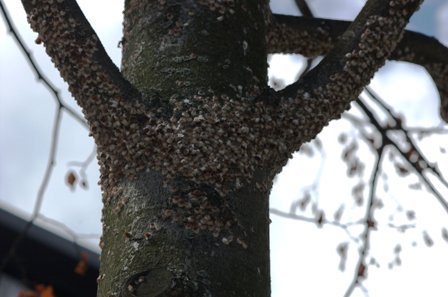
I have done another wee slideshow, this time about trees in Belfast and how some of them, as above, are dying. Just click on the picture.
Posted in Belfast | 6 Comments »

This picture was taken at midnight on the Summer Solstice at White Park Bay in County Antrim, looking North, with a little help from a half moon. (On a nikon d70s at iso 200, f 1.8 and shutter speed of about 2 seconds.)
Posted in Uncategorized | Leave a Comment »
I was standing in Guildhall Square in Derry yesterday with 12,000 people listening to British Prime Minister David Cameron’s apology for the killings of 14 innocent people on the Bloody Sunday parade of January 30 1972.
Judging by the rapturous applause from the crowd, most were as surprised as I was by the frankness of the statement. I have always understood that, whatever the lip service paid to law and order, the army was effectively immune. So this contradicted that understanding.
However, my prejudices about the army are grounded in experience during the early Troubles of witnessing the bullying manner and thuggery of the Parachute Regiment in particular and other regiments too.
I never had any doubt that the dead of Bloody Sunday were murdered, and I believe that many civilians were murdered by soldiers in Ballymurphy and Springhill and other areas.
Mr Cameron was conceding that the paras who killed on Bloody Sunday had disgraced the army and their country but insisting there would be no other open ended enquiries and that he believed the record of the army in Northern Ireland was a proud one. His concession is limited.
Perhaps he is allowing that the killers of Bloody Sunday will be the scapegoats for Britain’s excesses during the Troubles. And if the Republican community is of a mind to offer similar scapegoats, he appears to be hinting that the head of Martin McGuinness would be welcome.
http://malachi.podcastpeople.com/redirect/media/39069malachi-o-doherty-39069mp3Posted in Politics, Northern Ireland | 3 Comments »
Ed Moloney
Voices From The Grave
Two Men’s War in Ireland
Faber and Faber
ISBN 978-0-571-25168-1
A lot of courage went into this book so it should be better.
I want to concentrate on the first part, which is unfair to David
Ervine whose interview completes the book, but the story of Brendan
Hughes has been more poltiically relevant.
Brendan Hughes risked his standing within the IRA’s collective memory to give an account of the armed campaign and what he saw as its betrayal by Gerry Adams.
As a committed IRA militant over a period of decades, with uncounted
killings under his belt, he was in a position to tell us much more
than he did.
He will have known that he was likely to be dismissed as a traitor by
some and reviled as a coward by others when the story he told to
Boston College was published.
And that is how it has been.
He has been accused of whinging that big boys made him do bad things, a reading of the book which sees Hughes eschewing his own moral responsibility. By this version, he now regrets having killed people and is unable to face the reality that he didn’t get what he thought he was fighting for.
Actually there is little sense in the book that Hughes regretted
anything that he did, apart from ending the first Hunger Strike to
save lives.
There is also very little indication that he personally did anything bad at all.
He says that he wanted to kill as many soldiers and policemen as
possible and get as many bombs into Belfast as he could. But far from pleading innocence of bad deeds by attributing the blame to others who directed him, he does not actually own up to anything.
And, harsh as it may seem to say this, it is because we never have an account of Hughes actually killing anyone that we can’t judge him from his words.
For example, in the story about the murder of Jean McConville, Hughes attributes the decision to ‘disappear’ her to Gerry Adams. But he says he heard this from Ivor Bell. He never puts himself close enough to the decision to kill her to give that claim authority.
As it stands, it is hearsay.
Now, of course, Brendan Hughes may know more than he is owning up to.
He will have felt a responsibility to defend those close to the
action and he was making some concession to the IRA’s requirement of secrecy.
But it’s still just hearsay.
As one of the key leaders of the IRA in Belfast at the most violent
period of the Troubles he had blood on his hands. But this account
puts him at a distance from the action, and that is ironic given that
his charge against Gerry Adams is that he denies what he did.
The contrast offered between Adams and Hughes is that the one denies his IRA past and the other owns up to his and is proud of it.
But Brendan Hughes does not own up to very much.
And the reader will suspect that that is because he wants to think
well of his IRA career and he wants us to think well of him as a
person.
So we have the old myth that the IRA defended the community, was loved by the community and that Brendan was a hero to his people.
Moloney has responsibilities in this too.
The account of the riots in August 1969, in which Brendan Hughes
decided he needed to arm himself and defend the people is just the old standard republican baloney that the Catholic Falls was attacked by the Loyalists. I thought this was dispensed with years ago.
The fact that the rioting was initiated on the Falls Road in an
organised effort to burn out Hastings Street police station, and that
this attack was kept up for hours before there was any shooting at all by any side, or any intrusion of Loyalists onto the Falls, undermines any claim that those who were there have to being innocents caught unawares.
A lot of men on the Falls that night were up for a rattle and it seems
likely that Brendan was one of them.
And if there are questions about the integrity of Hughes’s incomplete
account and of Moloney’s grasp of the events of that month there is
also a weakness in the main thesis that Hughes develops.
Gerry Adams is a smart man, no doubt and an extremely devious one too, but is it really plausible that he singled handedly dismantled the
IRA? If it is true, then he is a genius, both tactically and
charismatically. Maybe he is. We should be all the more wary of him
then.
But there never was a prospect of Brendan Hughes’ dream being
fulfilled, of the IRA forcing the reunification of Ireland.
How would Brendan have preferred that that reality be incorporated
into the political evolution of the IRA?
There would have been integrity in the IRA saying that the cause was lost and urging others not to pursue further armed struggle to achieve what could not be achieved by those means. That would have been a surrender. It’s what defeated armies usually do.
The Adams way was to dress up the surrender as a victory. That he has got away with that, largely, is appalling, but it’s not hard to see
how many a republican would enjoy the joke.
Yet, for all these criticisms, this is the most important history of
the IRA yet written.
It gives us a flavour of life in the prisons and how IRA OCs at times
abused and brutalised their own men.
It gives us the appalling account of the murder of Paddy Joe Crawford, hanged by men who were effectively made to collude in their own intimidation – for why else was Paddy Joe killed but to warn others not to break under questioning.
But more than anything, this book and the promise of others to follow, as other interviewees die and their accounts are released, puts a bomb under the paramilitary projects to write the history of the Troubles on their own terms.
The simple, widely endorsed account, of how the IRA had to do what it did and made Ireland a better place, has been refuted and will be refuted over and over again down the decades to come.
As will other versions too.
The creation of such an archive by Boston College was an act of
courage and brilliance which leaves no liar safely proofed against
disclosure in the future.
Posted in Uncategorized | 2 Comments »
Welcome
This is the blog of my journalism and recordings, with some extracts from my books too. I tend to sound off on Northern Ireland Politics and Culture. Some of the work here will be recent journalism, articles that have appeared in the Belfast Telegraph or elsewhere, but there is a lot of material going back a couple of years now, so please hang around and browse. Malachi
Audio Highlights
The Street
-
Recent Posts
January 2026 M T W T F S S 1 2 3 4 5 6 7 8 9 10 11 12 13 14 15 16 17 18 19 20 21 22 23 24 25 26 27 28 29 30 31 Tags
accident arab army Bartlett Belfast Benghazi Bet bicycle bike bloodshed Christmas climate Collins commandos crime culture cycling death dog Donegal Don Juan DUP Economy Eoghan Euro father financial speculation gadaffi Greece Haass Harris IRA Ireland Israel Jude Letter Libya massacre memoir museum nature Northern Ireland O'Doherty OTRs peace Police Politics protest PSNI Religion religon Santa sectarianism Sinead Morrissey slaughter Terror terrorism weapons weather wind writers
 Malachi O'Doherty