The Catholic church is in disgrace.
We do not know how many priests have molested children but we know that hundreds did. The old argument put up in defence of the church, that a child was in no greater danger from a priest than from any other type of person, is now invalidated. Children were in danger at the altar rails, in the sacristy and in schools.
Still, it is likely that more priests – many more – did not offend than did.
There is no excuse for some of the craven whinging from priests who tell us that they suffer now for sins they did not commit, drawn low in general esteem by the behaviour of others.
That behaviour suggests that they want to cash in on what victimhood is going and preserve the old relationship with the people and their children. They just don’t grasp the fact that it is the whole church that is tainted.
For, if there are many innocent priests, there are not so many innocent bishops.
Aside from Bishop Diarmuid Martin’s heroic breach with the institutional secrecy of the church, which made the Murphy report possible, there may not be a single other bishop above suspicion of criminal cover up and collusion.
We have now had two diocesan reports, in Ferns and in Dublin. The pattern of abuse and secrecy is the same in both. It may be presumed that the same pattern covers the whole island, and perhaps the whole Catholic world.
So, this is about a collapse of moral authority.
For many ordinary Catholics it must feel a bit like the fall of communism did in Russia. Archbishop Martin’s contribution was Glasnost, candour. It was timely and it was called for, but nothing that follows from it is reversible.
This is at least like the moment when Kruschev disclosed the sins of Stalin to a shocked populace, and made them nervous about how to reconcile their conditioned reverence for the Great Leader with the newly comprehended reality.
The question facing Ireland now is, who needs bishops?
The management of child abuse by the Vatican and the refusal to co operate with the Murphy commission, remind us that Rome is a foreign state exercising power in other countries. Indeed, the excuse for not co operating was precisely that it would only accept communications on a diplomatic, state to state basis.
It sees the relationship with Ireland as political.
There is only, however, a theological basis for an arrangement whereby appointed emissaries of Rome should excercise power in Ireland, govern schools and hospitals and direct the expenditure of government money. That basis is that the Catholic hierarchy is legitimate legatee of Christ’s apostles, dispensing divine authority.
If people don’t believe that, why would they concede any authority to a bishop?
The irony is that ireland has been preoccupied in the last century with the fear that it was being treated like a colony by Britain while Rome had its unanswerable consuls and footsoldiers in every parish and school.
And they took their orders from the top, even orders to contravene state law, as when in 2001 the Pope demanded that all complaints against priests be first referred to him, and that even this order should be kept secret.
Bishops are an unecessary stratum of authority. That they be removed is all the more urgent given that they have abused that authroity and conspired against the people. But who is to remove them?
The Taoiseach says that the sacking of bishops is for the church to decide on, even though his government shovels money towards the church for the administration of services which are government responsibility.
The Catholics of Ireland wouldn’t know how to ditch their bishops, even after they have lost all respect for them.
The priests have pledged obedience to the bishops, and when they have been at odds with them, they have cowered docilely away. This happened when the Conference of Priests of Ireland disbanded,two years ago, demoralised by a sense that the bishops were paying no attention to them.
And anyway, the dispute there was that the priests were angry about the main measure the bishops had put in place to assert their concern for abused children. They had ruled that any priest accused of abuse would be immediately suspended. Priests, who depend on the church for a roof over their heads, wanted this rule reversed.
Anyway, usurp the bishops and Ireland becomes protestant.
But the rapid fall off in the numbers of priests will change the character of Catholic Ireland soon, and shift the centre of influence to the laity. Some then will see the Bishops as the enduring link to a global church; some others may see them as a superfluous burden.
The behaviour of Bishop Donal Murray of Limerick, cited in the Murphy report for ‘inexcusable’ handling of a paedophile priest during his time as an auxiliary bishop in Dublin, is an illustration of how reluctantly these men are slouching towards full realisation of their responsibility and shows us what pathetic moral champions they make.
Bishop Willie Walsh has been defending Murray on the grounds that somone who had read the report had explained to him that Murray’s offence was slight. Walsh conceded he had not read the report himself.
So his immediate instinct in the face of a moral challenge was to close ranks and patronise the rest of us. It was ok for him not to have read the report but the rest of us should lay off poor Donal Murray until we had.
In no other walk of life would such disemblers and bumblers be deferred to as figures of authority, and what Ireland is contemplating now is the possibility that those who covered up for paedophiles, on secret instructions from their master in Rome, should continue to wield power, run services, administer schools and hospitals and appoint the clergy and exact total obedience from those clergy.
This would be an almost inconceivably inappropriate and unjust outcome from the disclosures that they conducted themselves like a criminal mafia against the people from whom they exacted reverence.
But who will step forward and take responsibility and power away from these disgraced men?
Anybody?
Archive for the ‘Uncategorized’ Category
Who Needs Bishops?
Posted in Uncategorized on December 5, 2009| Leave a Comment »
Evening in Belfast
Posted in Uncategorized on November 21, 2009| 1 Comment »
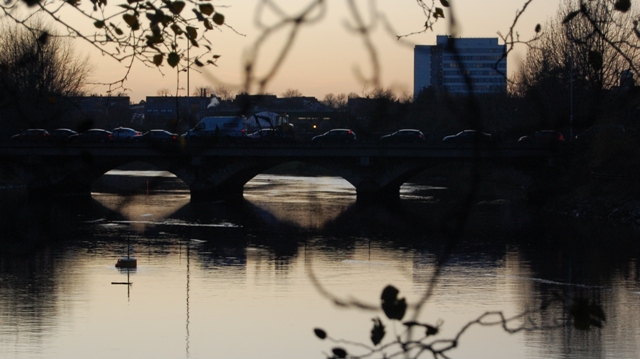
Another Pesky Belfast Mural
Posted in Uncategorized on November 20, 2009| Leave a Comment »

The new book, some extracts..
Posted in Uncategorized on November 16, 2009| 1 Comment »
My next book, Under His Roof, to be published by Summer Palace Press in time for Christmas, is a sequence of vignettes about my late father, Barney O’Doherty. I have recorded a few pieces below and will add more later.
Keeping Yourself to Yourself
http://malachi.podcastpeople.com/redirect/media/35587malachi-o-doherty-35587mp3
Barney assessed the merits of a man by his ability to keep quiet about his doings.
Barney’s Dogs
http://malachi.podcastpeople.com/redirect/media/34620malachi-o-doherty-34620mp3We always knew a dog’s time was up when it started to cough. These were dry hacking coughs that disturbed the creature’s whole body. And the bounce would go out of the beast as the grip of distemper tightened. Barney would not even consider calling a vet but he had sufficient concern to try his own remedies.
Barney’s Language: http://malachi.podcastpeople.com/redirect/media/34215malachi-o-doherty-34215mp3
Barney lived in a world in which spanners and knives and even people were not named. The yoke and the cutty and the gulpin were to be spoken of a little coyly, in case others listening in should know what you were talking about. There were other traditional language terms used around me growing up, ‘thran’, to describe a canny person of few words and dry humour, Barney never used those other words much. The beauty of those words is in their capacity to sharpen thought and refine an image. Barney was not preserving an old language so much as an old code.
Barney’s Noises http://malachi.podcastpeople.com/redirect/media/32300/malachi-o-doherty-32300mp3
Snoring was nature’s guard dog. At the ancient campfire, it was probably a warning to all dangerous animals to stay away, for the man is never more bestial and appalling than when he is shuddering from deep in his throat up to his sinuses.
Shying Away from Suicide
Posted in Uncategorized on November 8, 2009| 1 Comment »
No one really understands suicide in Northern Ireland. The numbers registered each year vary wildly despite efforts to reduce them. Traditionally suicide was treated like a shameful secret. Now the disinclination of the media to report it is rationalised as compassion for the bereaved. The outcome is the same, scant reportage and minimal discussion.
http://malachi.podcastpeople.com/redirect/media/35457malachi-o-doherty-35457mp3All My Audio
Posted in Uncategorized on November 4, 2009| 1 Comment »
I use a host site to support all the audio on both this blog and on ArtsTalk. You can visit that site now as a faster way of tracing podcasts. It’s called Voice of Mal.
Why do the Poor Die Younger?
Posted in Uncategorized on October 23, 2009| Leave a Comment »
The good news today is that people currently 60 years old and in good health can expect to live another 40 years.
But a conference in Belfast on Health Inequalities heard statistics showing that life expectancy varies across a small city like this.
The disparity adds up to 5,000 deaths a year in Ireland!
My contribution was to say it isn’t enough to moralise about working class people smoking and eating junk food.
http://malachi.podcastpeople.com/redirect/media/35144malachi-o-doherty-35144mp3Politics and the PC
Posted in Uncategorized on October 21, 2009| 3 Comments »
This is a recording of a speech I made to the Civil Service ICT Conference, Moving On, in Limavady on October 20.
They invited me to get voluble on the subject of how well journalists and politicians have adapted to the digital age.
Part one starts with a bit of personal history.
http://malachi.podcastpeople.com/redirect/media/35118malachi-o-doherty-35118mp3In part two the speech examines how politicians have managed on the net, and particularly how they have failed to comprehend the opportunities created by Facebook and Twitter.
http://malachi.podcastpeople.com/redirect/media/35119malachi-o-doherty-35119mp3Margaret Ritchie Interview
Posted in Uncategorized on September 28, 2009| 2 Comments »
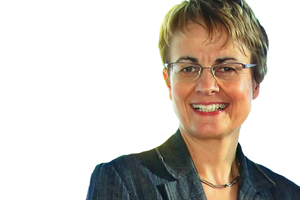 Here’s a new kind of interview that blogging is more suitable for than the other media. It is a recording of an interview for a newspaper. So it is not like a radio interview. I break a lot of radio rules: by affirming a question with wee grunts that no producer would tolerate. I would edit a radio interview, not just to tidy up the interviewee’s presentation, (by de-umming, for instance) but to tidy up my own. Here I have left both of us in the raw – unprofessional – state. The line of discussion changes abruptly several times and the interviewee, Social Development Minster Margaret Ritchie, relaxes and laughs in a way that her tight media training would not allow her to do in a studio.
I think it is legitimate to post this because she knew she was being recorded and that anything she said was quotable. She only once asked to go off record and that was when she made a joke that, if quoted flatly, might have been read as meaning more than she wanted it to. I have excised that joke.
The article drawn from this interview was published in the Belfast Telegraph on Saturday 26th September.
Mixing with the Media
Posted in Culture and Society, Uncategorized on September 9, 2009| 1 Comment »
I work as a media trainer and presentation coach with Channel 56.
Today I delivered a speech to a seminar organised by Agenda NI on why people should engage with the media and not be afraid of it. Here’s a recording.
http://malachi.podcastpeople.com/redirect/media/34491/malachi-o-doherty-34491mp3Welcome
This is the blog of my journalism and recordings, with some extracts from my books too. I tend to sound off on Northern Ireland Politics and Culture. Some of the work here will be recent journalism, articles that have appeared in the Belfast Telegraph or elsewhere, but there is a lot of material going back a couple of years now, so please hang around and browse. Malachi
Audio Highlights
The Street
-
Recent Posts
April 2026 M T W T F S S 1 2 3 4 5 6 7 8 9 10 11 12 13 14 15 16 17 18 19 20 21 22 23 24 25 26 27 28 29 30 Tags
accident arab army Bartlett Belfast Benghazi Bet bicycle bike bloodshed Christmas climate Collins commandos crime culture cycling death dog Donegal Don Juan DUP Economy Eoghan Euro father financial speculation gadaffi Greece Haass Harris IRA Ireland Israel Jude Letter Libya massacre memoir museum nature Northern Ireland O'Doherty OTRs peace Police Politics protest PSNI Religion religon Santa sectarianism Sinead Morrissey slaughter Terror terrorism weapons weather wind writers
 Malachi O'Doherty